Camping Safety & Hiking Safety
for Women FAQ
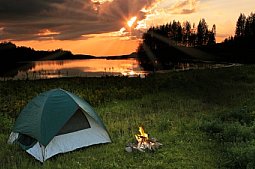
If you're a woman looking for camping safety or hiking safety, you're in the right place.
Violent crime in remote areas is rare compared to urban risks. But rare does not mean impossible - so it's wise to be fully prepared nevertheless.
And know that females commit ~20% of violent crimes (per the FBI). Some may seem friendly (at first), commit crimes alone, or in groups, or help male partners. So evaluate ALL strangers by their behavior and red flags.
Ask a Park Ranger to suggest a campsite
The Appalachian Trail Conservancy (ATC) is the nationwide model for guidebooks, maps, and accessories. Also see their very thorough Safety Tips and Crime Prevention. Although the nationwide wilderness crime rate is low, the ATC recommends, "Never let your guard down."
Securing Your Start and Finish
Your safety strategy begins at the trailhead. Most "wilderness crime" actually happens within 100 yards of the parking lot. Follow these steps to minimize your risk:
► Never leave anything of value in sight—not even a spare jacket or a handful of loose change. Professional thieves look for "clues" of a well-stocked vehicle. If you must leave gear behind, lock it in the trunk before you arrive at the trailhead so no one sees you "hiding" it.
► The "Pre-Hike" Scan: Before getting out of the car, take 30 seconds to observe. Is anyone lingering without hiking gear? Is there a vehicle with someone sitting inside for no apparent reason? If the "vibe" is wrong, drive to a different trailhead or return later.
► Arrive Ready to GO: Don't spend 20 minutes at your open trunk organizing gear. This signals that you are distracted and reveals exactly what equipment you have. Try to be "trail-ready" the moment you park.
► The Return Strategy: As you finish your hike, have your keys in hand before you reach the parking lot. Do a quick 360-degree scan of the area before approaching your vehicle. Once inside, lock the doors immediately.
Campsite Privacy = Security
Use these privacy tactics to help ensure your campsite remains your private sanctuary:
► The "Vanish" Rule: Try to set up your camp out of the direct line of sight from the main trail. Even 50–100 feet of brush or a natural bend in the terrain can make you invisible to casual passersby.
► Hide Your Schedule: Arrive at your intended site closer to dusk. This gives others less time to observe you.
► Digital Delay: Never post your specific location or "live" stories to social media. Wait until you have broken camp and moved to a new area before sharing your beautiful views.
► Light Discipline: Use a red-light setting on your headlamp at night. It preserves your night vision and is much harder to spot from a distance than a bright white beam.
► Trust the "Vibe": If you arrive at a designated site and your intuition feels uneasy about the neighbors - leave. It's better to hike an extra mile in the dark than to spend a sleepless night in a state of hyper-vigilance.
Basic Prep
► Hike with trusted groups or established meetups.
► Share itineraries and check-ins via apps.
► Trust instincts - if someone feels "off," leave politely.
► Many women hike happily with proper preparation (pepper spray, dogs, etc.). Such as:
Full Prep
► Pepper Spray - readily available. Or Bear Spray (works on humans, too).
► A map and GPS app. And keep your child near with a GPS Child Locator.
► Security Products - Personal Devices & (legal) Defensive Weapons
► Travel Security - Camping
► Survival Options - SOS Distress Signals
► Basic survival gear (water, flashlights, protein bars).
Your Takeaway
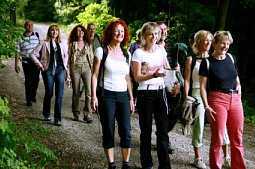
There is safety in numbers - the larger the group, the better – you'll have more camping safety resources.
Almost half of all Search and Rescue missions are for solo hikers out for a short hike. Be fully prepped for even the shortest of jaunts. See Survival Options Overview.
The wilderness is worth it. With awareness and tools, you can protect your peace and enjoy it fully.
NOTICE: This non-profit website is for informational purposes only and is drawn from the bibliography and USDOJ. Use the information at your own risk. See disclaimers.
Crime-Safety-Security > Travel Security Overview > Camping Safety